Android单元测试-常见的方案比较

节选自:Android单元测试-常见的方案比较


前言

本文将介绍在Android Studio中,android单元测试的介绍和实现。相关代码托管在github上的AndroidJunitDemo中,涉及到的用例代码收集于google官方提供的测试用例android-testing,同时进行了简化和修改。你可以从该demo中学习单元测试简单的使用,在工程中,包含两个模块,一个实现计算器功能的CalculationActivity,另外一个是PersonlInfoActivity,可以编辑姓名,邮箱和生日等信息,并保存到SharePreferences中,同时提供了两个模块的单元测试。

单元测试

关于单元测试,在维基百科中,给出了如下定义:

在计算机编程中,单元测试(英语:Unit Testing)又称为模块测试, 是针对程序模块(软件设计的最小单位)来进行正确性检验的测试工作。程序单元是应用的最小可测试部件。在过程化编程中,一个单元就是单个程序、函数、过程等;对于面向对象编程,最小单元就是方法,包括基类(超类)、抽象类、或者派生类(子类)中的方法。

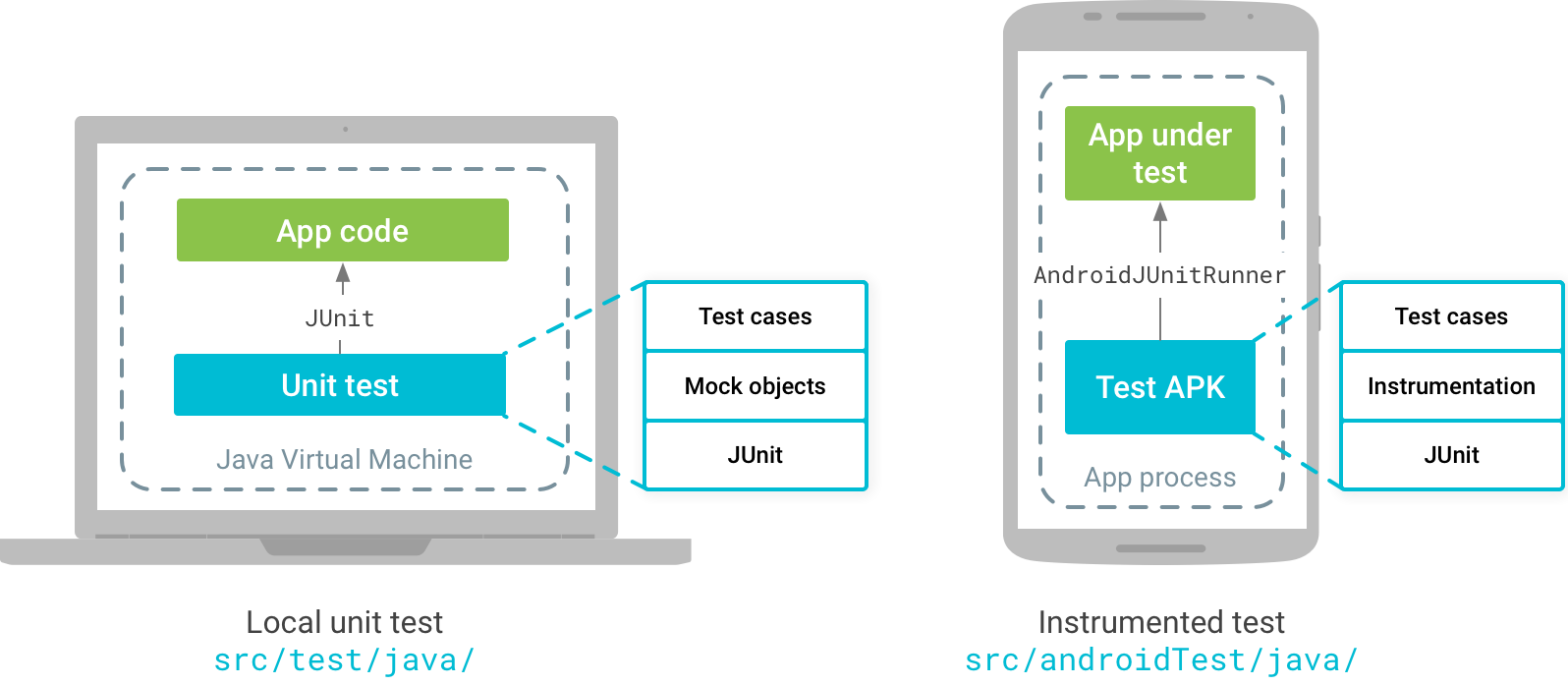
android中的单元测试基于JUnit,可分为本地测试和instrumented测试,在项目中对应

  • module-name/src/test/java/.
    该目录下的代码运行在本地JVM上,其优点是速度快,不需要设备或模拟器的支持,但是无法直接运行含有android系统API引用的测试代码。
  • module-name/src/androidTest/java/.
    该目录下的测试代码需要运行在android设备或模拟器下面,因此可以使用android系统的API,速度较慢。

以上分别执行在JUnit和AndroidJUnitRunner的测试运行环境,两者主要的区别在于是否需要android系统API的依赖。
在实际开发过程中,我们应该尽量用JUnit实现本地JVM的单元测试,而项目中的代码大致可分为以下三类:

  • 1.强依赖关系,如在Activity,Service等组件中的方法,其特点是大部分为private方法,并且与其生命周期相关,无法直接进行单元测试,可以进行Ecspreso等UI测试。
  • 2.部分依赖,代码实现依赖注入,该类需要依赖Context等android对象的依赖,可以通过Mock或其它第三方框架实现JUnit单元测试或使用androidJunitRunner进行单元测试。
  • 3.纯java代码,不存在对android库的依赖,可以进行JUnit单元测试

Android最简单的LoadingDialog

节选自:Android最简单的LoadingDialog


Activity的基类

public class BaseAcitivity extends Activity {

    private AlertDialog alertDialog;

    public void showLoadingDialog() {
        alertDialog = new AlertDialog.Builder(this).create();
        alertDialog.getWindow().setBackgroundDrawable(new ColorDrawable());
        alertDialog.setCancelable(false);
        alertDialog.show();
        alertDialog.setContentView(R.layout.loading_alert);
        alertDialog.setCanceledOnTouchOutside(false);
    }

    public void dismissLoadingDialog() {
        if (null != alertDialog && alertDialog.isShowing()) {
            alertDialog.dismiss();
        }
    }
}

XML:loading_alert

<RelativeLayout xmlns:android="http://schemas.android.com/apk/res/android"
    android:layout_width="match_parent"
    android:layout_height="match_parent"
    android:background="@android:color/transparent">

    <ProgressBar
        style="@style/AppTheme.NoActionBar"
        android:layout_width="wrap_content"
        android:layout_height="wrap_content"
        android:layout_centerHorizontal="true"
        android:layout_centerVertical="true"
        android:layout_gravity="center_horizontal" />

</RelativeLayout>

在styles.xml中添加

<style name="AppTheme.NoActionBar">
    <item name="android:windowActionBar">false</item>
    <item name="android:windowNoTitle">true</item>
</style>

安卓-连续点击两次返回键退出程序-二级界面的退出程序

节选自:安卓-连续点击两次返回键退出程序-二级界面的退出程序


法一:实现方式,通过记录按键时间计算时间差实现:

import android.app.Activity;
import android.os.Bundle;
import android.view.KeyEvent;
import android.widget.Toast;

public class MainActivity extends Activity {

    private long exitTime = 0;

    @Override
    protected void onCreate(Bundle savedInstanceState) {
        super.onCreate(savedInstanceState);
        setContentView(R.layout.activity_main);
    }

    @Override
    public boolean onKeyDown(int keyCode, KeyEvent event) {
        if (keyCode == KeyEvent.KEYCODE_BACK) {
            exit();
            return false;
        }
        return super.onKeyDown(keyCode, event);
    }

    public void exit() {
        if ((System.currentTimeMillis() - exitTime) > 2000) {
            Toast.makeText(getContext(), "再按一次退出程序", Toast.LENGTH_SHORT).show();
            exitTime = System.currentTimeMillis();
        } else {
            finish();
            System.exit(0);
        }
    }
}

Android获取相机最佳预览大小和获取屏幕宽高

/**
 * 获取最佳预览大小
 *
 * @param parameters       相机参数
 * @param screenResolution 屏幕宽高
 * @return
 */
private Point getBestCameraResolution(Camera.Parameters parameters, Point screenResolution) {
    float tmp;
    float mindiff = 100f;
    float x_d_y = (float) screenResolution.x / (float) screenResolution.y;
    Size best = null;
    List<Size> supportedPreviewSizes = parameters.getSupportedPreviewSizes();
    for (Size s : supportedPreviewSizes) {
        tmp = Math.abs(((float) s.height / (float) s.width) - x_d_y);
        if (tmp < mindiff) {
            mindiff = tmp;
            best = s;
        }
    }
    return new Point(best.width, best.height);
}

/**
 * 获取屏幕宽度和高度,单位为px
 *
 * @param context
 * @return
 */
public static Point getScreenMetrics(Context context) {
    DisplayMetrics dm = context.getResources().getDisplayMetrics();
    return new Point(dm.widthPixels, dm.heightPixels);
}

Android使用POI读取Excel(XLS和XLSX)

1.添加依赖

// Excel
implementation 'org.apache.poi:poi:3.17'
implementation 'org.apache.poi:poi-ooxml:3.17'
implementation 'org.apache.xmlbeans:xmlbeans:3.1.0'
implementation 'stax:stax:1.2.0'

2.在程序中使用

private void readExcel(String fileName) {
    try {
        InputStream inputStream = new FileInputStream(fileName);
        Workbook workbook;
        if (fileName.endsWith(".xls")) {
            workbook = new HSSFWorkbook(inputStream);
        } else if (fileName.endsWith(".xlsx")) {
            workbook = new XSSFWorkbook(inputStream);
        } else {
            return;
        }
        Sheet sheet = workbook.getSheetAt(0);
        int rowsCount = sheet.getPhysicalNumberOfRows();
        FormulaEvaluator formulaEvaluator = workbook.getCreationHelper().createFormulaEvaluator();
        for (int r = 0; r < rowsCount; r++) {
            Row row = sheet.getRow(r);
            CellValue v0 = formulaEvaluator.evaluate(row.getCell(0));
            CellValue v1 = formulaEvaluator.evaluate(row.getCell(1));
            Log.i("Excel", "readExcel: " + v0.getStringValue() + "," + v1.getStringValue());
        }
        workbook.close();
    } catch (IOException e) {
        e.printStackTrace();
    }
}